Asia’s demand for coffee produces more than one third of the world’s coffee, with Vietnam and Indonesia among the world’s top five largest coffee producers. Drinking coffee is a cultural phenomenon; many people in Singapore and Malaysia start their day with a cup of kopi, while the urban young can be sipping lattes in modern cafes with minimalist aesthetics. In major cities across Asia, independent cafes and domestic coffee chains have flourished alongside international coffee chains.
Japan is the region’s largest consumer of coffee, with coffee sales worth $34.45 billion in 2020, according to Mersol & Luo. China is already the second largest coffee market at $14.25 billion, recently overtaking South Korea ($12.6B), and enjoying near double-digit year-on-year growth. Long-term demand for coffee in China is set to grow, potentially rivalling America as the largest consumer market for coffee globally.
Indonesia is not only a major producer and exporter of coffee beans. In recent years, the country has seen a rapid growth in coffee consumption. Its domestic coffee consumption reported in June 2021 was 144% more than that of Australia and 28% more than the UK, countries that already have a high per-capita consumption of coffee, according to USDA’s Coffee: World Markets and Trade report.
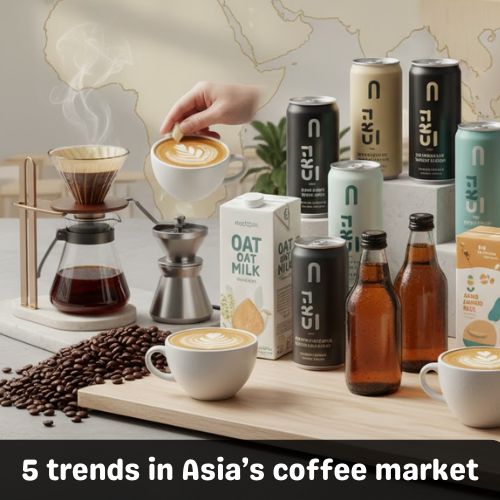
In this article, we highlight 5 trends observed in Asia’s thriving coffee market.
1) Increasing popularity of specialty coffee
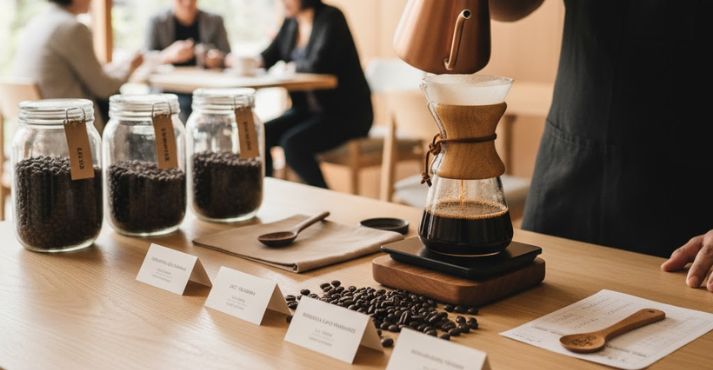
The demand for specialty coffee was brought about by the Third Wave of Coffee, a movement characterised by increasing coffee quality, more direct trade, traceability and sustainability, as well as innovative brewing methods.
The Asia-Pacific region is estimated to be the fastest-growing specialty coffee market in the world. According to Research and Markets, the region’s specialty coffee sector will experience a 15.3% annual growth rate from now until 2030.
Specialty coffee is a term used by the Specialty Coffee Association (SCA) to refer to coffee that has scored over 80 points on a 100-point scale. It is considered to be the crème de la crème, grown at the perfect altitude, in the best soil and picked at the right time before it’s sold to premium coffee traders and roasters.
2) Demand for high-quality ready-to-drink (RTD) products
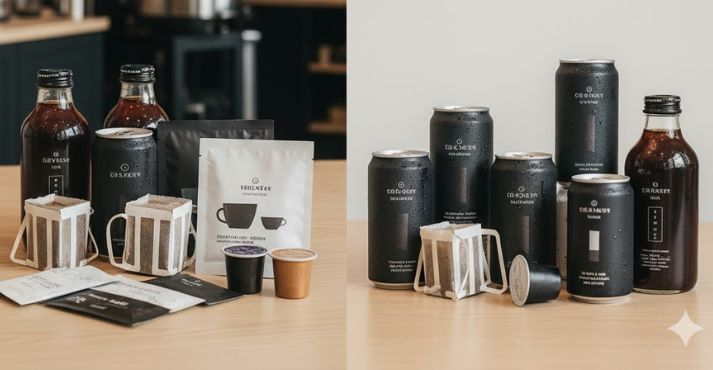
Convenience is a growing priority for coffee consumers. Canned and RTD coffee products, including cold brew and milk-based beverages, have been popular in many countries for some time now. Coffee connoisseurs believe that the emerging fourth wave of coffee will be focused on the availability of high-quality products such as coffee beans, cold brew, instant coffee and capsules. Roasters and coffee shops have started production of high-quality ready-to-drink (RTD) products, such as coffee in cans, and products like instant coffee, drip bags. For example, Lavazza, an Italian brand that has been making espresso for more than 125 years has released some of its single-serve organic coffees in a RTD format.
3) Conscious consumerism
Coffee consumers are becoming more conscious about the origins of their coffee. According to research from Mintel Global New Products Database (GNPD), nearly half (48%) of all new coffee product launches in 2020 carried an ethical or environmental claim—highlighting the growing importance of ethical coffee sourcing—close to double the number from almost a decade ago (2012) when just one in four (25%) coffee launches were sustainable.
There are many certification programmes in the coffee sector. Some of the popular ones include Fairtrade, USDA Organic, 4C, UTZ and Rainforest Alliance. According to Fair Trade, 78% of consumers trust the Fair Trade Certified label, and 1 in 3 are more likely to purchase with the Fair Trade Certified label.
As younger consumers are becoming more environmentally conscious, they will show less tolerance for waste, especially pods that are recyclable but rarely recycled. Mintel analysts expect the launches of ‘greener’ coffee pods to grow fast.
4) Shift to plant-based milk alternatives
Consumers have for years been slowly shifting away from traditional dairy, the popularity of plant-based milk has surged since the pandemic as consumers become more environmentally conscious, especially across the younger generation. With the increasing availability of plant-based milk alternatives at both independent cafes and international coffee chains, more consumers are choosing plant-based milk for their coffees.
Blue Bottle Coffee, considered a major player in third-wave coffee, has made oat milk the default across its US cafes. Having launched pilots at the start of 2022, they found that 59% of customers were ordering oat milk after four months. Similarly, Flash Coffee, a Singapore-based coffee franchise, partnered with Oatside to make oat milk the default in any milk-based drinks, at no additional cost to consumers.
The popularity for oat milk continues to grow in the region. The majority of Swedish oat milk brand Oatly’s revenue in Asia is coming from a single product – Oatly’s Barista edition, according to Green Queen. Asia is also Oatly’s fastest-growing region, with mainland China, Hong Kong, and Taiwan contributing 94% of the revenue.
5) Growing at-home consumption of premium coffee
With pandemic lockdowns catalysing a growing interest in premium and specialty coffee at home, the at-home coffee market looks set for further growth as consumers move towards sophisticated brewing methods and invest in high-end equipment.
Ownership of specialty brewing equipment has grown as hybrid and remote working arrangements become the norm. Mintel research shows that a third of remote workers own a single-cup specialty coffee brewer (eg, Nespresso) compared to a quarter of non-remote workers; 20% of remote workers own a pour-over coffee set compared to less than 10% of non-remote workers. As consumers seek to recreate café beverages at home, this indicates opportunities for retail coffee brands and complementary categories such as coffee additives and coffee appliances.
Looking to expand your business to the Asian market?
Evolved from the highly successful Food&HotelAsia (FHA), FHA-HoReCa brings together the most extensive line-up of the world’s leading foodservice and hospitality suppliers through 5 specialised sectors – Bakery, Pastry & Gelato; Foodservice & Hospitality Equipment; Hospitality Style; Hospitality Technology and Speciality Coffee & Tea. Contact us to get involved.
Country-Wise Coffee Insights (Singapore, China, Japan, Indonesia)
Singapore: Premiumisation and Café Innovation
Singapore’s coffee scene blends tradition and modernity. While “kopi culture” remains strong, specialty cafés and premium roasters are thriving. Consumers prefer unique single-origin beans, artisanal brewing, and plant-based milk options. Convenience trends, such as RTD cold brews and coffee subscription services, also show rapid growth.
China: Fastest-Growing Coffee Consumer Market
China is the most rapidly expanding coffee market in Asia, driven by urban youth and a strong café lifestyle movement. Tier 1 and Tier 2 cities are seeing exponential growth in specialty cafés, with demand for high-quality espresso, cold brew, and plant-based alternatives. China’s e-commerce platforms play a major role, with online coffee brands achieving massive sales through livestreaming and quick-commerce delivery.
Japan: Mature Market with Strong RTD Dominance
Japan remains Asia’s largest coffee consumer, with RTD beverages contributing significantly to market value. Vending machine coffee, convenience-store brews, and premium bottled cold brew dominate the landscape. At the same time, Japan’s specialty coffee scene continues to grow, driven by consumer appreciation for craftsmanship and precision brewing.
Indonesia: Strong Producer with Rising Domestic Consumption
Indonesia is well-known as a major coffee producer, but local consumption is growing rapidly. Young professionals and urban consumers are driving demand for specialty beans, artisanal roasting, and modern café concepts. RTD coffee, cold brew, and drip bags are increasingly popular, supported by strong local brands and growing export interest in Indonesian specialty coffee.
FAQ’s
Why is the Asia coffee market growing so quickly?
Growth is driven by rising incomes, urban lifestyles, café culture expansion, and increased demand for specialty and premium coffee products.
Which country leads the Asia coffee market?
Japan is the largest consumer market, while China is the fastest-growing and expected to surpass other markets in the next decade.
What are the most popular coffee trends in Asia right now?
Specialty coffee, RTD beverages, plant-based milk options, ethical sourcing, and home-brewing trends are leading the market.
How is sustainability shaping Asia’s coffee market?
More brands are adopting ethical certifications such as Fairtrade, UTZ, and Rainforest Alliance as consumers become more eco-conscious.
Is the demand for specialty coffee increasing in Asia?
Yes, the specialty coffee segment is seeing strong double-digit growth, driven by younger consumers seeking high-quality, traceable coffee.
Conclusion
Asia’s coffee market is evolving rapidly, shaped by premiumisation, sustainability, café culture, and rising home-brewing demand. As markets like China, Indonesia, and Vietnam continue to expand, the region will play an influential role in global coffee consumption and innovation. Brands, retailers, and roasters that adapt to these trends will be well-positioned to capture the growing opportunities in this dynamic market.