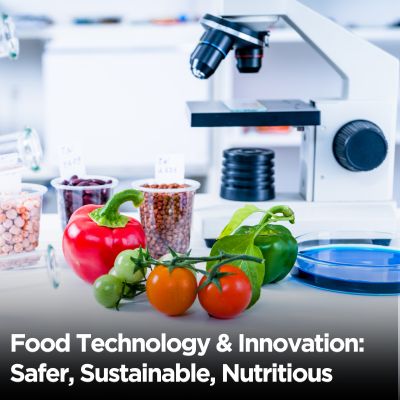
Have you noticed the rise of plant‑based alternatives or the convenience of frozen meals in supermarkets? These innovations are just the beginning of the world of food technology.
Food technology combines science, engineering, and culinary arts to improve how food is produced, processed, packaged, and delivered safely to consumers.
From precision farming and biotechnology to advanced packaging and sustainable solutions, it affects every stage of the supply chain.
For food businesses, this is not just a trend but an opportunity. With growing global demand for nutritious, sustainable, and convenient foods, technology helps create safer products, extend shelf life, and reduce waste.
One recent analysis estimates the global food-technology market at around $229.49 billion in 2025, and forecasts it could grow to about $538.47 billion by 2034.
Whether you are interested in cultured meats, functional products, or smart packaging, exploring food technology can provide valuable insights to guide future decisions.
What is Food Technology?
Food technology is the field that applies scientific principles to understand food components, improve product quality, and support the safe and consistent development of food products.
It focuses on how ingredients behave, how food changes during preparation, and how these processes can be managed to improve safety, shelf life, and overall performance.
Food technology also connects closely with culinary arts. Food science explains the physical, chemical, and biological properties of ingredients, while culinary practices use this knowledge to explore new techniques, flavors, and textures.
Concepts such as gastronomy and molecular gastronomy help chefs and developers refine recipes and create new food experiences using evidence-based approaches.
When a new food product or ingredient is introduced, chefs, food scientists, and nutrition professionals work together to study its characteristics and potential uses.
Consumers are often cautious about trying unfamiliar items, so collaborations between scientific research and culinary creativity ensure that new products offer meaningful advantages in taste, quality, or nutritional value.
Through this combination of science and culinary understanding, food technology supports safer formulations, longer shelf life, ingredient optimization, and better customization of foods for different dietary needs.
Food Packaging Technology: Ensuring Safety and Freshness
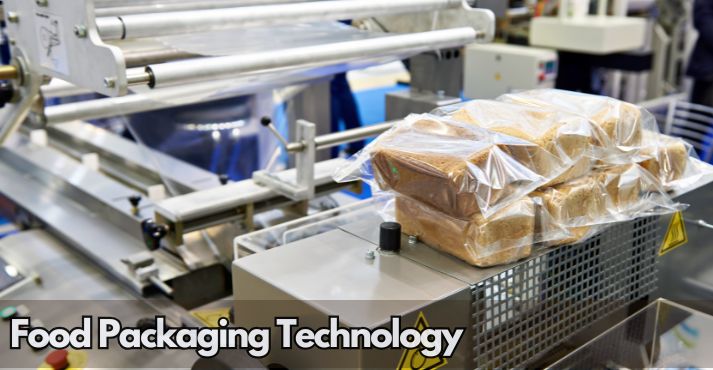
Food packaging technology focuses on the materials and systems used to protect food, maintain freshness, and support the overall consumer experience.
It keeps products safe from the moment they are packed until they are consumed by using engineered barriers, secure sealing methods, and temperature-resistant materials that reduce the risk of contamination and spoilage.
Packaging serves as a protective layer that blocks moisture, oxygen, light, and other elements that can affect food quality.
Barrier coatings, airtight seals, and heat- or freeze-tolerant materials help preserve taste, texture, and nutritional value. Many solutions also reduce direct contact between packaging and food, thereby supporting safety and shelf stability.
Recent developments move toward sustainability, smart features, and greater convenience for consumers. Biodegradable, plant-based materials help reduce waste and appeal to environmentally conscious buyers.
In fact, a 2025 survey by McKinsey & Company found that 39% of global consumers consider environmental impact to be “extremely or very important” when evaluating product packaging.
Smart packaging uses QR codes, freshness indicators, and time-temperature sensors to provide useful product information. Convenience-focused designs such as easy-open packs and resealable closures support busy lifestyles while reducing unnecessary waste.
These advancements allow packaging to maintain quality, enhance safety, and improve the way consumers interact with the food they purchase.
Robots in Food Service: Transforming the Industry

Robotics is increasingly used across the food service industry, improving efficiency, consistency, and food safety. From kitchens to delivery and packaging, robots help food businesses maintain quality while reducing human error and operational costs.
Types of Robots in Food Service
- Kitchen Robots: These robots handle food preparation, cooking, and drink service with precision. Moley’s robotic arm replicates a chef’s movements, plans menus, and plates meals accurately. Spyce uses robotic steamers and grills to quickly prepare customized meals. These systems enhance efficiency, reduce contamination risks, and maintain consistent quality.
- Food Delivery Robots: Autonomous delivery robots provide safe, contactless service while reducing labor requirements. Starship’s six-wheeled robot navigates streets using AI mapping. Domino’s Nuro R2 delivers pizzas with GPS tracking and PIN-secured access. Such systems allow faster deliveries, better order accuracy, and increased customer convenience.
- Robots in Food Packaging: These robots handle sorting, cutting, filling, sealing, and labeling with precision. Vision-guided sorting robots and robotic arms ensure hygiene and consistency while adapting to different product sizes. These systems maintain safety, improve efficiency, and reduce the risk of contamination.
The adoption of robotics also brings some challenges. Initial costs for implementing durable, hygienic equipment are high.
Automation may reduce demand for human labor in kitchens, delivery, and packaging. Technical limitations mean robots cannot fully replicate creative cooking and may require oversight.
Customer acceptance can vary, although a recent survey found that 60% of respondents said they were somewhat likely to order from a kitchen that uses robotic technologies for food preparation.
Despite these challenges, robotics in food service continues to expand. Businesses are using automation for precision meal preparation, predictive demand management, enhanced hygiene, and customized food production, creating safer, faster, and more consistent customer experiences.
3D-Printed Food: The Future of Culinary Arts
3D food printing technology creates edible items layer by layer using digital modeling, precise deposition systems, and specialized food materials.
Ingredients such as proteins, carbohydrates, fats, fibers, and hydrocolloids are carefully deposited and solidified to form intricate shapes and textures.
Bioprinting with living cells is also being explored for lab-grown meat and plant-based alternatives, opening new avenues for sustainable food with more customization options.
Applications include chocolates, customized pasta, cultured meat, plant-based meat substitutes, and seafood alternatives. This technology allows personalization of nutrition, adaptation for easier swallowing, and the creation of visually unique culinary experiences.
Precision printing reduces food waste by using ingredients more efficiently, while AI integration optimizes texture, flavor, and nutrient profiles.
Recent advancements focus on expanding ingredient diversity, integrating sensors and AI for real-time monitoring, and improving accessibility and affordability.
As costs decrease and adoption grows, 3D food printing is expected to offer chefs and consumers new ways to enjoy visually appealing, nutritionally optimized, and sustainable meals.
Foodtech: Driving Innovation in the Food Industry
Foodtech uses modern innovation and technology to improve how food is produced, distributed, and consumed. It covers areas such as food processing, packaging, preservation, safety, nutrition, and supply chain operations.
By applying data-based systems, AI, and smart solutions, foodtech boosts efficiency, strengthens food safety, cuts waste, and supports new food experiences.
Key applications include smart farming, precision agriculture, and sustainable production practices that support higher yields and better resource use.
Online food delivery platforms and cloud kitchens make meal ordering faster and more convenient, while AI-based nutrition platforms help consumers make better dietary choices.
Food safety solutions like blockchain, traceability systems, and real-time sensors maintain transparency and quality throughout the supply chain. Packaging developments such as biodegradable materials, reusable formats, and smart features also help preserve freshness and support environmental goals.
Leading foodtech companies showing the impact of these innovations include:
- Beyond Meat: Beyond Meat creates plant-based meat substitutes that closely match the taste and texture of traditional meat. Products like Beyond Burgers and Beyond Steaks offer nutritious, eco-friendly meal options. The brand focuses on reducing environmental impact while making plant-based eating mainstream.
- Perfect Day: Perfect Day produces dairy proteins through precision fermentation, creating whey and casein without using animals. Its ingredients are lactose-free, cholesterol-free, and cruelty-free, while maintaining the flavor and functionality of dairy. The company supports ethical consumption and offers a sustainable alternative for brands seeking cleaner production.
- Lunchbox: Lunchbox provides digital ordering, marketing, and backend solutions for restaurants. The platform helps businesses streamline operations, improve customer engagement, and optimize sales. Supporting online ordering and guest management, it strengthens the digital dining experience. This allows restaurants to compete effectively in the fast-changing food service market.
- UPSIDE Foods: UPSIDE Foods grows real meat from animal cells, eliminating the need for livestock farming. Its cultivated chicken and other products deliver authentic taste with reduced environmental impact. The company addresses sustainability and animal welfare through its production approach.
Agritech and Its Role in Sustainable Food Production
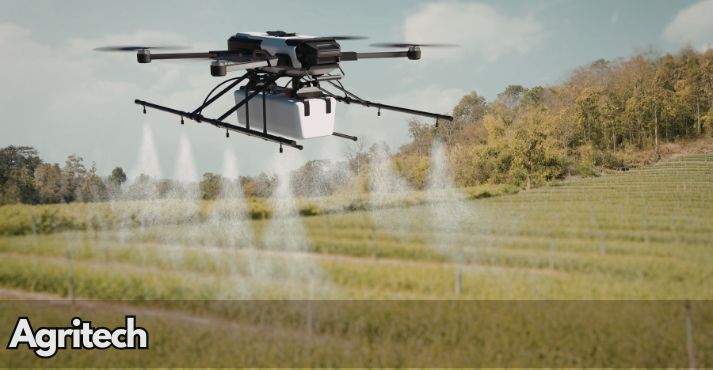
Agritech applies automation and data analytics in farming to improve efficiency and support long-term sustainability.
Rather than focusing on individual crops, it takes a farm-wide, strategic approach, helping farmers manage operations, monitor resources, and respond to environmental and economic challenges.
Drones, ground sensors, GPS-guided machinery, and IoT networks collect continuous data across planting, irrigation, fertilization, and harvesting.
This data helps farmers plan operations more effectively, reduce input waste, and address risks such as pests, diseases, and climate-related disruptions.
In regions like Southeast Asia, where small-scale farms dominate, agritech solutions increase productivity without expanding land use, protecting natural habitats and biodiversity.
Farmers also benefit from accurate weather forecasts, improved resource use, and methods that raise yields while lowering production costs.
Adoption challenges remain, including limited connectivity in rural areas, digital literacy gaps, high upfront investment, and inconsistent regulations.
As access improves and systems become more affordable, agritech offers a practical pathway for sustainable, resilient, and resource-efficient farming.
Precision Agriculture: The Future of Farming
Precision agriculture operates at the field level, using technology to optimize specific areas of a farm for improved efficiency, productivity, and sustainability.
It relies on GPS mapping, drones, remote sensors, IoT devices, and automated machinery to collect real-time data on soil conditions, crop health, and environmental factors.
Variable Rate Technology (VRT) and smart irrigation systems adjust fertilizer, pesticide, and water applications based on field-specific data, reducing chemical runoff and conserving resources.
In certain regions, the use of IoT sensors and smart irrigation has resulted in water savings while increasing crop productivity by approximately 25%.
These methods help improve crop quality and yield consistency while minimizing environmental impact through precise input use and reduced waste.
Urban and vertical farms in Southeast Asia, such as ComCrop and Sky Greens in Singapore, show that high-density crop production is possible efficiently, using less land and water.
By combining real-time data, automated systems, and advanced analytics, precision agriculture allows farmers to make informed, field-level decisions that enhance efficiency, maintain crop health, and promote environmentally responsible farming practices.
Vertical Farming: Revolutionizing Urban Agriculture
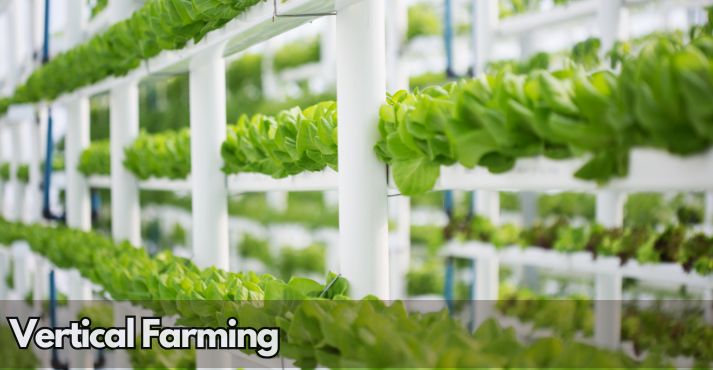
Vertical farming grows crops in stacked layers, often inside buildings or urban structures, making the most of limited space. This method, also called stacked agriculture, brings fresh food production closer to consumers while reducing dependence on rural farmland.
By growing upward instead of outward, cities can transform unused or compact spaces into productive agricultural hubs.
Vertical farming relies on innovative systems to cultivate crops efficiently:
- Tower Gardens: Vertical structures that stack plants upward, ideal for compact urban environments.
- Hydroponics: Soil-less cultivation using nutrient-rich water, often layered to maximize space and nutrient use.
- Aeroponics: Plants grow suspended in air, with misted nutrients delivered directly to roots for faster growth.
- Controlled Environment Agriculture (CEA): Temperature, humidity, and light are regulated, allowing year-round crop production.
These methods conserve water, optimize nutrient delivery, and allow continuous harvests regardless of seasons. Vertical farming also reduces the need for extensive land use, helping preserve natural habitats and support biodiversity.
Automation and robotics further enhance efficiency by handling planting, monitoring, and harvesting, lowering labor costs, and minimizing human error.
Food Processing: From Farm to Table
Food processing turns raw ingredients into safe, edible products using techniques like washing, blanching, baking, fermenting, and freezing.
Primary processing prepares raw foods, secondary processing creates items like yogurt, bread, and canned goods, and tertiary processing delivers ready-to-eat or convenience foods. These steps improve safety, extend shelf life, and make food easier to store and consume.
Health, sustainability, and efficiency are driving trends in the industry. Consumers want minimally processed foods with clear ingredients, along with functional options that offer extra nutrition.
Automation, AI, and robotics improve production accuracy and quality, while digital tools like IoT and blockchain help monitor processes and maintain supply chain transparency.
Innovation also focuses on reducing environmental impact. Energy-efficient equipment, alternative proteins, lab-grown meats, and smart packaging with freshness indicators help save resources and limit waste.
By combining safety, efficiency, and sustainability, modern food processing ensures a steady supply of nutritious, convenient, and eco-conscious foods.
The Science Behind Food: Enhancing Quality and Nutrition
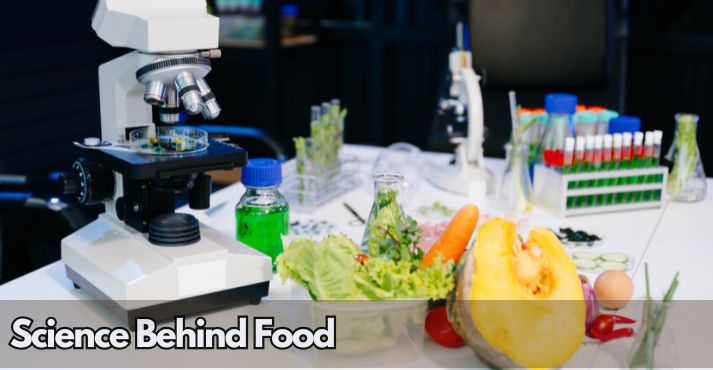
Food science studies the principles behind food production, processing, safety, and nutrition, combining chemistry, microbiology, and engineering.
Food chemistry examines the structure and reactions of food components, influencing flavor, texture, and nutritional value.
Microbiology focuses on microorganisms that affect safety, preservation, and fermentation, while engineering applies precise methods to processing, packaging, and storage to maintain quality from farm to table.
Food science supports product development by improving taste, texture, and nutritional content. Fortified foods, functional products with added vitamins or minerals, and probiotics contribute to health outcomes.
In 2023, about 379 million people gained access to fortified foods, helping prevent around 12 million cases of anaemia. Safety is ensured through rigorous testing, quality control, and adherence to regulatory standards.
Sustainability and efficiency guide modern food production. Biotechnology enhances crop yield and nutrient content through genetic modification and fortification.
Controlled processing techniques reduce waste, conserve energy, and maintain nutritional quality, supporting safe, nutritious, and environmentally conscious food production.
Conclusion
Advancements in food technology are influencing every stage of the food supply chain, from production to packaging.
Innovations such as controlled environment agriculture, hydroponics, aeroponics, automation, and AI-driven processes improve efficiency, maintain quality, and allow for consistent year-round production.
Biotechnology and fortification enhance nutritional content, providing food that meets diverse needs while reducing waste.
Sustainability is integrated into food production, with energy-efficient processing, eco-friendly packaging, and waste reduction practices helping to limit environmental impact.
By combining scientific insight with technological innovation, the food industry can deliver safer, healthier, and more accessible products, supporting consumer well-being and the long-term stability of food systems.